

There are two types of people in this world - ordinary and resistant. I was always told that I belong to the latter category, so as you can understand that debate is something close to my heart. When I became a 9th grade student at school, I was provided an opportunity to demonstrate my resistant personality in the debate club established at our school within the scope of a project implemented by the Jinishian Memorial Foundation. Being not fully developed, but yet a self-confident and result-oriented 13 year old, I started gaining debating skills. And I immediately understood that the characteristic given to me since childhood was completely true.
Abrahamyan Nane, Gyumri, 2 years old
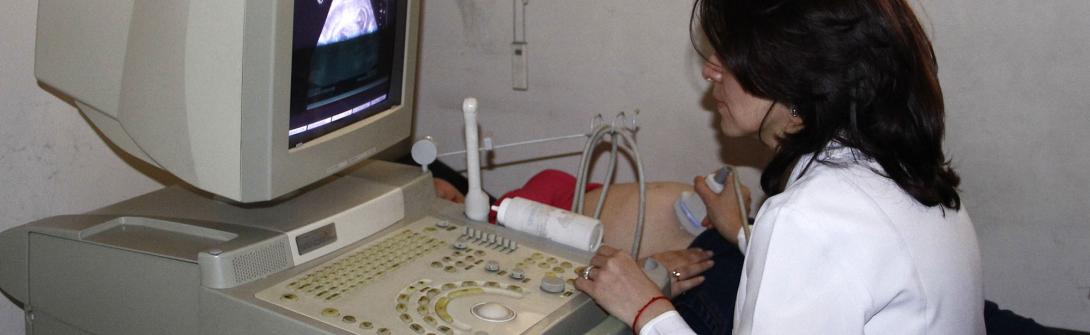
The parents applied to the Arabkir Medical Center having problems with their infant’s gait. The radiography detected two-sided dysplasia of the hip (DDH). After a conversation with the parents of the child it became clear that the grandmother, being herself a medical worker, displayed indifference to the ultrasound screening and did not allow the procedure. However, when the child began to walk, it was the grandmother who noticed the strange gait of the child and, realizing the seriousness of her wrong decision, made the parents consult the appropriate doctor. Now the child is under ambulatory treatment at the Arabkir Medical Center where the doctors will try to make the hip grow normally by means of conservative methods like using gypsum bandages and, later on, wearing a separating harness. The child will be monitored until the end of the treatment. However, because of the late detection of the hip dysplasia, it’s difficult to foresee how the child’s hips will grow. One cannot rule out that the doctors could very well recommend a surgical intervention when the child grows up.
The Importance and Consequences of Ultrasound Screening
Khachatryan Mane, Akhuryan region, 1,5 years old
Mane did not pass her ultrasound screening immediately after she was born because the hospital ultrasound specialist was absent that day. The child was discharged from the hospital. After a month the newborn child was brought to see a pediatrician. By a fortunate coincidence, the ultrasound specialist was also in the office. Learning that Mane had not passed the ultrasound screening, he suggests to her parents to complete it as soon as possible. After the screening she was diagnosed with a two-sided dysplasia of the hip. The pediatric orthopedist of Gyumri starts the treatment of the child, explaining to the parents what dysplasia of the hip is, what treatment the child must undergo, and what the consequences will be if the child receives the proper treatment in time. Realizing the seriousness of the illness causing this disability, Mane’s parents listen to the advice of the doctor and promise to be consistent during the whole period of the treatment.
The sad reality of the Artsakh (Nagorno Karabakh) war (1988-1994) is that it wounded the soul of each person living there. It took away thousands of lives, and left children orphaned. Nothing is forgotten, but life goes on, and what else can we do? Some say they would rather have died in the war than continue to live as they do.
Armen is one of those people. Born in Hadrut town, he became a war veteran by age 21, traumatized psychologically and physically. During military action in Meliqashen village, he was seriously injured and his leg was surgically removed. It was 1993. His head and lungs were affected as well. Armen received medical assistance in Hadrut and Stepanavan hospitals. But another stab in the back was waiting at home. The girl he loved did not want contact with a handicapped man. Armen’s health was getting worse and worse. He did not want to communicate with people. In 2005 memory loss problems arose. Armen lived with his family, who were all very vulnerable. They were on the list for receiving an apartment until…
The Youth Engaged in Society (YES) project implemented by JMF Armenia and Youth for Achievements NGO promotes civil society through extracurricular debate clubs in over 100 schools in Armenia. Tatev joined the debate club in 8th grade thinking she would participate in the club a year at most. However, she was captivated by the project and continued through graduation. Not only did the project help her understand and debate issues of human rights and democracy, it led her to study law at the French University of Armenia. With guidance from JMF, Tatev has started a debate club in her university, which continues to attract students and engages them in debate on critical issues facing Armenia. “Debate club is a lifetime experience that increases students’ knowledge and self-confidence,” says Tatev.
Thanks to a generous gift from a vacation bible school group in Iowa, seven year old Arusik received two digital hearing aids. Arusik lives in Vanadzor city, Armenia with her parents, two older sisters and one younger brother. This city suffered severe damage and thousands died during the 1988 earthquake, the effects of which are still seen today. Arusik and her family live in a rundown one-bedroom apartment with broken windows and doors.
During Armenia's worst period of political and economic instability, Hovhannes started a farm from nothing in the abandoned and devastated village of Tghkut. Today, Hovhannes is a prosperous farmer. In 1989 Hovhannes began his career as a farmer by caring for the livestock of neighboring farms. Seven years ago, he borrowed 10 cows to start his own farming business. He managed to buy the cows in two years, making the start of a rewarding business. In 2005 Hovhannes was given the opportunity to receive a favorable micro-credit from the Jinishian Memorial Foundation (JMF). JMF had decided to extend its micro-credit services to the Meghri region after a study revealed the Meghri region, which includes Tghkut, had no access to micro-credits due to its remoteness from the capital city Yerevan.
Remote Armenian Community Claims its Right for Preschool Facility
The remote community of Arevatsag in north Armenia’s Alaverdi region will finally have the kindergarten it has lacked for nearly 18 years after winning a grant from the well-known donor organization – Jinishian Memorial Foundation, and securing funding for its staff.
Some 20 children will soon attend the pre-school education facility to be constructed within the facilities of the Arevatsag Secondary School.
The project Ensure Sustainability of Rehabilitation Treatment in Marzes of Armenia builds the capacity of regional doctors and nurses and creates rehabilitation teams for early diagnosis and treatment of childhood disabilities. Initiated in 2007 by the Jinishian Memorial Foundation, the project has transformed the lives of hundreds of children with cerebral palsy, spina bifida, congenital hip disorders, and scoliosis.
One of the world’s oldest civilizations, Armenia was the first in the world to officially accept Christianity as its state religion. Unfortunately many decades of communist agnostic propaganda diminished the strong spiritual roots and traditions in the country. As a result of this spiritual gap, there is a lack of functioning churches and priests in many communities of Armenia. People’s knowledge about Christianity is very limited and is mainly based on the talks and ideology of parents that were strongly influenced by communistic atheism.
Recognizing the spiritual need to reach people with the gospel and to bring communities back to church, in 2006 the Jinishian Memorial Foundation-Armenia (JMF-Armenia) and the dioceses of the Armenian Apostolic Church together started a project called Spiritual Education and Experiences for Children.
Debate National Championship: A Celebration for All

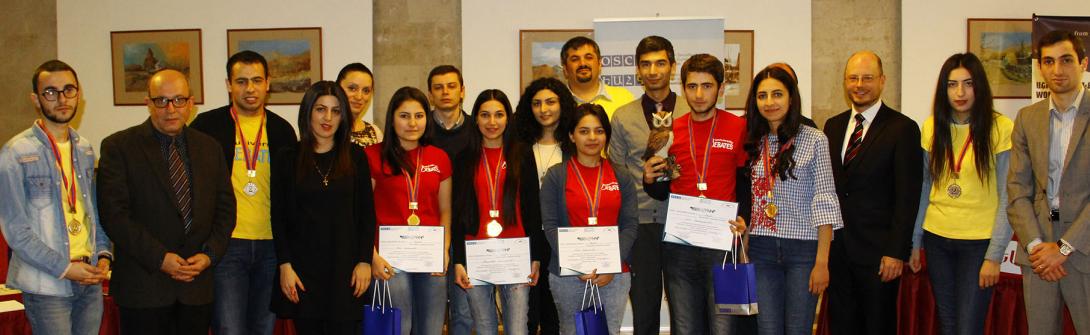
National Debate Championship (NDC) is the name given to the closing event, which brings together representatives of all 80 schools that participate in “Youth Engaged in Society” (YES) debate club project being implemented and funded by Jinishian Memorial Foundation and “Youth for Achievements” educational NGO and co-funded by European Union. This special championship is organized at the end of each academic year and has a very unique character. At first sight the National Championship is a “championship” which presupposes competition of teams, but in reality each year this event turns out to be a real celebration for all directly and indirectly involved in the project: debate club members, their mentors, parents, teachers, judges of debates and project implementers as well.
Diabetes is one of the most prevalent diseases among non-communicable diseases. About 50,000 people are suffering from diabetes in Armenia. The burning issue is the rejuvenation of diabetes, i.e. diabetes now starts in early childhood and continues throughout life, gradually becoming more debilitating if not controlled and treated early. Diabetes is not an entirely curable disease, but proper treatment may essentially reduce the severity of the disease. For children diagnosed with diabetes it is a turning point in life, since they should accept and understand numerous changes in their life activities including daily frequent blood tests and injections, rigid nutrition ration and balanced physical loads.
“Thanks ever so much for the opportunity to experience the many facets of Armenia and Karabakh. There is much to process and so much to discuss about the trip and from the learning to which we we...